
After watching how people read short messages, I’ve learned that STFU is not just blunt slang; in texting, gaming, and social media, its real weight comes from tone, context, and relationship. The same phrase can land as a funny reaction between close friends or turn into genuine anger when used carelessly.
That is why this digital slang carries a polite risk inside every online conversation, especially when the emotional reaction behind it is unclear in 2026 communication and youth slang spaces.
What Does STFU Mean in Text? Full Form and Quick Meaning
STFU is explicit slang and an informal acronym whose full form means “shut the f*** up,” so in meaning in text, it usually tells someone to stop talking. From what I’ve seen in casual texting, gaming chats, and social comments, the message mood depends on tone, context, and relationship because it can feel like a funny reaction, playful shock, or casual banter among close friends.
But the same strong phrase may carry a rude tone, offensive risk, or hurtful phrase impact during arguments, professional chats, or public replies, especially in digital communication where tone difficulty, misread tone, weak conversation context, missing emojis, and quick misunderstanding can change the whole meaning.
Origin and Background of STFU
STFU began as internet slang built from four letters that turned a blunt explicit phrase into fast online shorthand for “stop talking” or “be quiet.” From my experience reading texting slang, its origin feels less like formal language and more like raw digital language, where emotion, surprise, annoyance, and frustration move faster than careful wording.
Over time, the same harsh phrase also became a casual abbreviation in meme culture, because tone variations can make it sound like playful shock, sarcasm, or a rude command depending on cultural context and online conversations.
Where Is STFU Commonly Used? Platform Usage in Texting, Chats, and Social Media
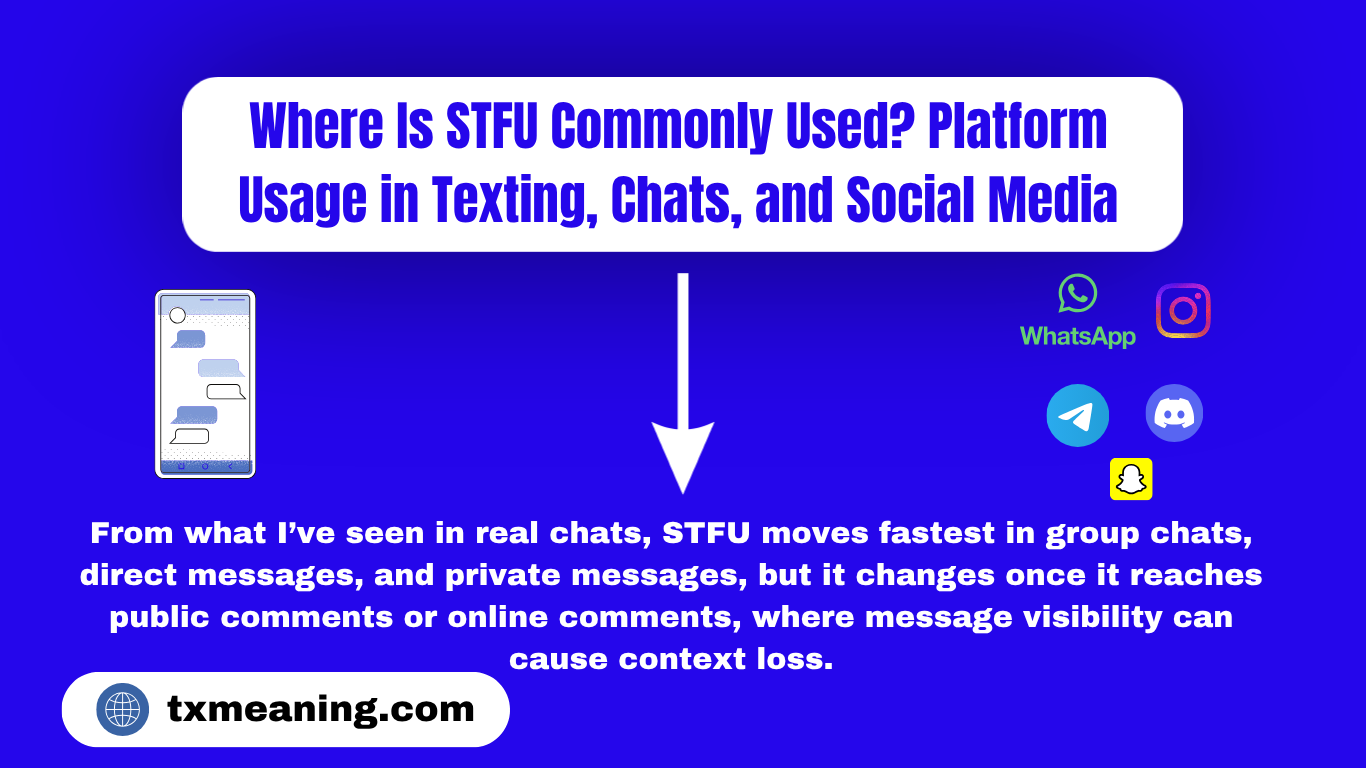
From what I’ve seen in real chats, STFU moves fastest in group chats, direct messages, and private messages, but it changes once it reaches public comments or online comments, where message visibility can cause context loss.
It often works like meme replies, meme language, friendly teasing, and casual slang in casual spaces, casual chats, normal chat, memes, and jokes, especially across social media usage, gaming platforms, modern texting, internet culture, and youth usage.
Its roots still feel visible in forums, chat rooms, gaming lobbies, online communities, mainstream texting, meme culture, and internet chat slang, where Shut The F* Up** became a quick text abbreviation for casual use.
The tricky part is that STFU may carry a playful tone in a personal conversation, but without context, directed toward a person, or under a hostile tone, the context difference matters a lot.
I would avoid it in emails, workplace communication, or formal communication, and choose a respectful alternative because 2026 usage still depends on digital nuance, wider audience, and informal communication boundaries.
When to Use and When Not to Use STFU
In real digital spaces, STFU works best only in personal chats, group chats, or direct messages where relationship-based context, tone clue, and joking tone make the rude impact feel lighter.
It can land as funny use, comic exaggeration, playful jab, or shock reaction when friends already share that vibe, but it turns risky with strangers, heated debates, online arguments, or professional chats or emails.
Avoid it in any academic setting, workplace message, or serious discussion because its explicit language, profanity, and aggressive tone can sound unprofessional fast. My practical rule is simple: use polite wording when the wrong person, serious use, or unclear tone reading could damage the conversation.
STFU in Chat vs Social Media
In private chats, I’ve seen STFU work more like emotional shorthand than a fixed insult, especially in close friendships, playful group chat, or casual joking where tone check matters; on social media, the same informal slang can feel louder because comments, viral posts, meme replies, short video comments, trash talk, and online debates turn a quick reaction phrase into bold replies with bigger real-world impact.
How to Respond When Someone Uses STFU
A calm reply often works better than matching the heat, because STFU can feel like a confusing acronym when your gut reaction is anger, surprise, or silence. In my experience, the safest move is to respond properly by reading the relationship clue, the wrong context, and the other person’s funny tone or joking use before reacting.
In personal messages or private chat, it may be playful, but with upset people, strangers, or serious conversations, choose polite alternatives and keep communication boundaries clear.
For a public reaction in front of a digital audience, avoid turning it into more aggression; use respectful language instead. The simple out loud rule helps too: if it would sound like a rude phrase spoken face to face, avoid usage and reply with direct but controlled words.
People Ask Questions (FAQs)
Is STFU always rude or offensive?
STFU is not always offensive; in real chat usage, it can sound like humor or quick reactions, but in a workplace setting or with authority figures, it becomes an inappropriate phrase fast.
Can I use STFU in professional chats or emails?
In my experience, STFU is usually bad to say in workplace messages; even with a softened tone, it feels too sharp for formal writing or academic messages, so check context and choose polite directness instead.
Where is STFU Commonly Used?
In my experience, STFU is commonly used where chat confusion, hype, intense gameplay, viral videos, anonymous replies, or a bold comment turns normal talk into quick reaction-based usage.
Is STFU bad to say?
STFU is not just a harmless phrase; its meaning changes with timing, so I’d avoid it around family members and know when to use or when not to use it. If it lands wrong, a mature reply like sorry keeps the tone closer to a respectful reply.
Can STFU be funny?
STFU can be funny in close-chat gossip when disbelief feels playful—“Haha okay” or “Only if you STFU first”; I’ve seen it land as a laugh only when people ask if joking and keep conversation repair easy.
What is the difference between STFU and WTF?
STFU pushes someone to stop talking, while WTF reacts to shocking news with disbelief like no way, you’re joking, or I can’t believe that; in my experience, STFU feels more direct, but WTF often reads like surprise.
Is STFU popular in 2026?
Yes, STFU is still popular in 2026 because its short form fits fast communication, typing speed, and sharp platform usage, though its personal meaning depends on tone, friendship, and context.
Conclusion
STFU can look like a rude and offensive phrase, but in real texting, it is not always used with anger; I’ve seen it shift between banter, shock, excitement, and a harmless tone when friends know the context.
The safest takeaway is simple: read the tone comparison, the situation reaction, and the relationship before replying, because STFU in casual chat, social media slang, or a meme phrase is very different from using it with bosses, coworkers, elders, or in professional emails.

I write about text meanings and common abbreviations, turning confusing short forms into simple explanations that anyone can understand without effort.